Raghu Rai
Magnum Photos. Taught me to read an image for what it leaves out. In his words: “Tarun combines the eye of a practitioner with the rigorous curiosity of an academic.”
a computer scientist who learned to look through a camera, and then through a forest’s records
I grew up near the Aravalli hills of Rajasthan. An uncle in the forest department at Ranthambhore, who was also a photographer, exhibited his pictures of the reserve’s wild cats, and that was my first sense that a photograph and a forest could belong to the same life.
A B.Tech. at Rajasthan Technical University: programming, databases, data mining and digital image processing. At the same time I was photographing weddings, travel and streets, and the camera slowly took over.
In New Delhi I worked alongside Raghu Rai of Magnum Photos and built the magazine’s documentary-photography community to more than 50,000 followers, a platform for lesser-known photographers across South Asia. Under his mentorship I learned to read an image for its framing, its timing and what it leaves out, and to ask what conditions produced it.
I ran a photography practice across India, from client briefs to archives, and then led a team of ten on digital campaigns for clients in the UK, Europe and North America. I had learned how to make people look at something, and I wanted to know what looking changed.
Ranthambhore’s enforcement records, a COVID-19 pivot from fieldwork to the record itself, and a thesis question I am still answering. Alongside it I volunteered with the Rajputana Society of Natural History and helped the Wildlife Institute of India estimate the tiger’s prey base across Sal forest and grassland.
For the People’s Biodiversity Register in Haryana I interviewed more than 200 households about the plants and practices they know, working through translators and local permissions. It was my first work with traditional ecological knowledge, and I have wanted to go back to it ever since.
First as a volunteer analyst for the Wildlife Crime Control Bureau, then at WCS-India, where I built a monitoring pipeline and a codeword lexicon in Hindi and Telugu.
Three decades of the Protected Area Update, turned into a public geospatial database. I also ran wildlife talks and nature walks on campus , and went looking for the people who were not already interested.
The India evaluation of UNEP’s Tide Turners Plastic Challenge: six states, four regional languages and a first-authored paper.
Species on Screen, WildTrace, Sift QDA and Kosma, a paper with Dr Veríssimo on conservation NFTs, and applications for doctoral research on games, media and behaviour for nature.
I have been lucky in my teachers. Each of them changed how I look at something.
Magnum Photos. Taught me to read an image for what it leaves out. In his words: “Tarun combines the eye of a practitioner with the rigorous curiosity of an academic.”
University of Oxford. Principal investigator on Tide Turners, and my co-author on two projects.
ATREE. Principal investigator on Tide Turners, the evaluation I led in India.
IIT Bombay. Guided the Protected Area Update work and how the news tells conservation.
My M.Sc. supervisors, at the University of Kota and WWF-India.
University of Kota. Taught me the ecology and the statistics, and pushed me to draw the counterintuitive reading.
A bicycle lets me meet a place slowly enough to notice the birds on the wires and the people at the tea stall.
On a road trip I am the one at the car window, watching green country go past and looking for birds before they are gone .
I learn a place through its food, and a shared recipe is often the easiest way into a conversation.
Weddings, streets and travel since 2012. The camera came before the science, and I still carry one.
The best days in the field are the long conversations: farmers, forest guards, teachers and elders who know things no dataset records.
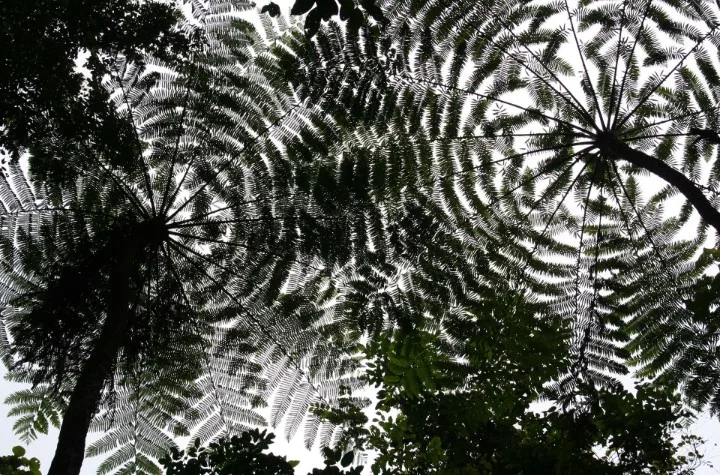
See as many forms of life on Earth as I can, on every continent, and learn from the people who have known them longest.
Traditional knowledge systems hold a lot of what science is still catching up on, and most of it is not written down in English. I want to learn from it with care, and to keep everything I make free and open, so that more people can reach it. My hope is simple: a kinder, humbler world that still has room for all the life it holds.